




Skip to content

Cart

Your cart is empty

The Knot: An Art Measured in Patience

The Knot: An Art Measured in Patience

Every hand-knotted carpet is built from a single, endlessly repeated act: a length of dyed yarn tied by hand around the threads of the loom, secured, and cut, then followed by the next, and the next, in their tens and hundreds of thousands. This is the foundation of the entire art. A fine carpet is not painted or printed; it is constructed, knot by knot, over a span of time that the finished surface only begins to suggest. To understand the knot is to understand the carpet — and to grasp the extraordinary patience that the craft has demanded of its makers for a thousand years and more.

Time made visible

Consider the scale of the labour. A finely woven carpet may hold several hundred knots within a single square inch, and the most exacting silk pieces hold a great many more, each one tied by hand. A weaver progresses row by row up the loom, and a large carpet of high fineness is not the work of weeks but of many months — in the most demanding cases, of years drawn from a single life. The density of a carpet's knotting is therefore not an abstract measure of quality. It is a record of human time and devotion, fixed permanently into wool and silk. Seen in this light, the carpet asks for a different kind of regard. Its intricacy is not ornament for its own sake but the accumulated evidence of countless deliberate decisions, made by a skilled hand over a long labour.

One does not merely own such a carpet. One becomes the custodian of the patience that made it.

The knot itself bears witness to its origin

Within the knotting lies a further depth of meaning. Across most of Persia, weavers employ the asymmetrical knot — known as the Senneh or Persian knot — which wraps a single warp thread and passes loosely beneath the next. It is this knot that permits the flowing, curvilinear detail for which Persian carpets are admired, allowing the design to curve and turn with great refinement. In certain regions, notably parts of the northwest, weavers instead tie the symmetrical knot, which produces a denser, more upright pile suited to bolder, more geometric designs.
The knot, then, does more than prove a carpet was made by hand. It testifies, to those who can read it, to the tradition in which the hand was trained. This is knowledge that appears on no label and discloses itself from no distance; it resides in the very structure of the carpet, available only to the practised eye. To distinguish one knot from another, and to understand what each reveals, is among the marks of true expertise in the craft.
The materials chosen long before the loom

The materials chosen long before the loom

The materials chosen long before the loom

The materials chosen long before the loom

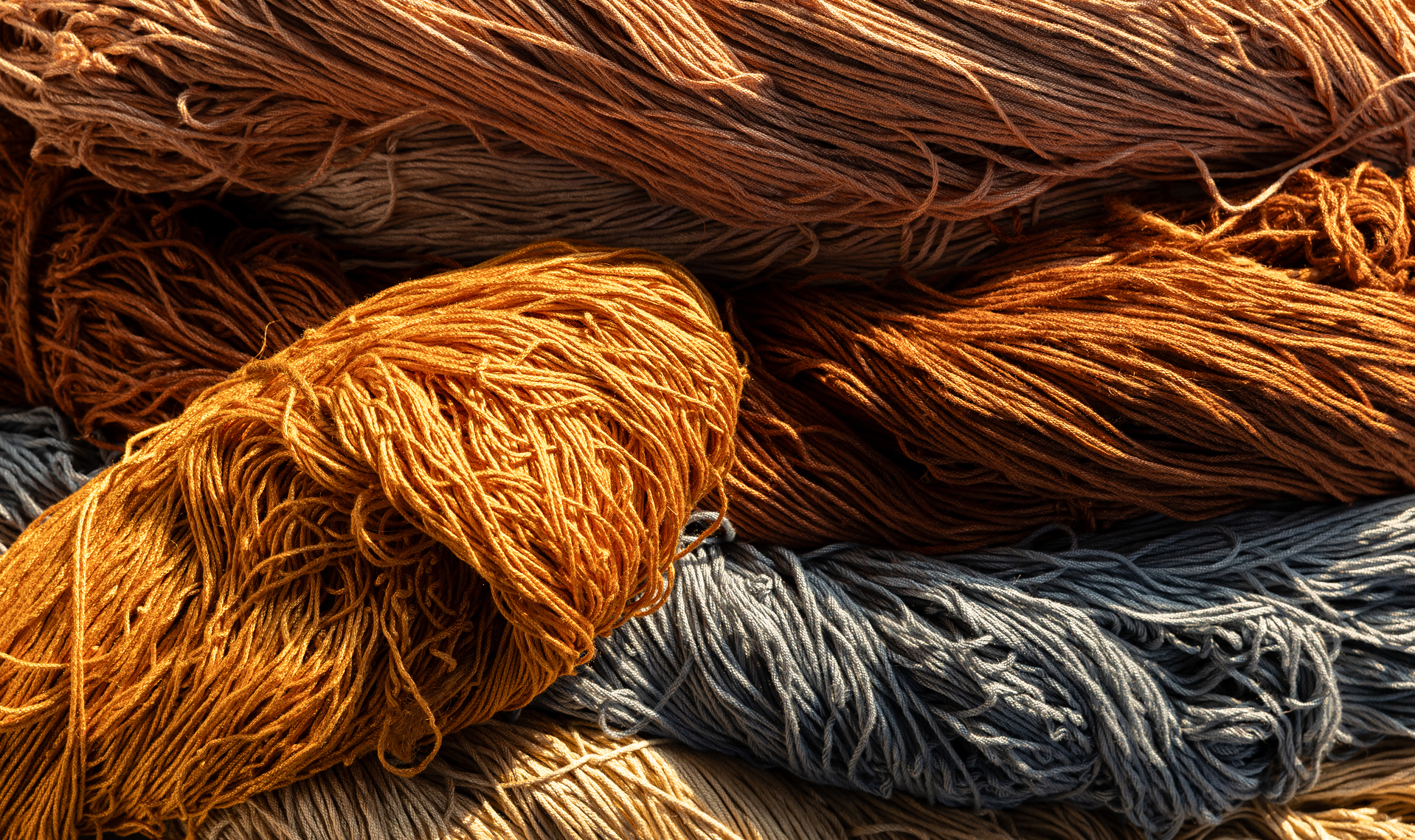
The carpet's endurance is decided before a single knot is tied. Wool from sheep raised in cold, high country carries a greater measure of natural lanolin, lending the finished pile a soft lustre and a resilience that endures for generations. The handspun wool of a village possesses a character distinct from the smooth, processed yarn of a city workshop. Beneath the pile, a foundation of cotton performs the quiet, essential work of holding the carpet flat and stable across decades, while silk, in the finest pieces, permits the very highest densities and a surface that shifts luminously in the light. Each of these was a considered decision, governed by long experience.

None of this is legible to the eye alone. It is known only through sustained nearness to the making — to the wool, the spinning, the looms — across a great span of years.

Obeetee has maintained that nearness for more than a century, and it is from this that the company can speak not merely to a carpet's beauty but to its construction, its method, and the reasons it will outlast nearly everything else brought into a home.

The witness on the underside

The carpet offers its own testimony, and it is found on the side that is never decorated. Turned over, a true hand-knotted carpet shows its pattern again upon the reverse, formed of individual knots that vary slightly in size and spacing — the unmistakable trace of a human hand. The makers who have nothing to conceal are precisely those who invite the eye to the underside first, for it is there that the carpet tells the truth of how it was made.

A machine leaves a uniform, lifeless grid; a weaver leaves something that breathes.

OTP graphic
OTP graphic