




Some corners of a home exist outside the usual chaos of the day: a chair that catches the morning sun, a book left open on the table, or a cup of tea allowed to grow cold, because, for once, there is nowhere else to be. These spaces rarely begin with a grand plan. In a home where every room is expected to serve a purpose, perhaps there is something quietly valuable about creating one that doesn't - a place designed not for entertaining or working, but for slowing down.

Why We Need Spaces to Slow Down
We have become accustomed to filling every pause. A spare moment rarely arrives. That is what makes a designated pause worthwhile. It gives stillness a physical presence within the home. It needn't be an entire room. What matters is creating a small separation from the pace of everything around it.
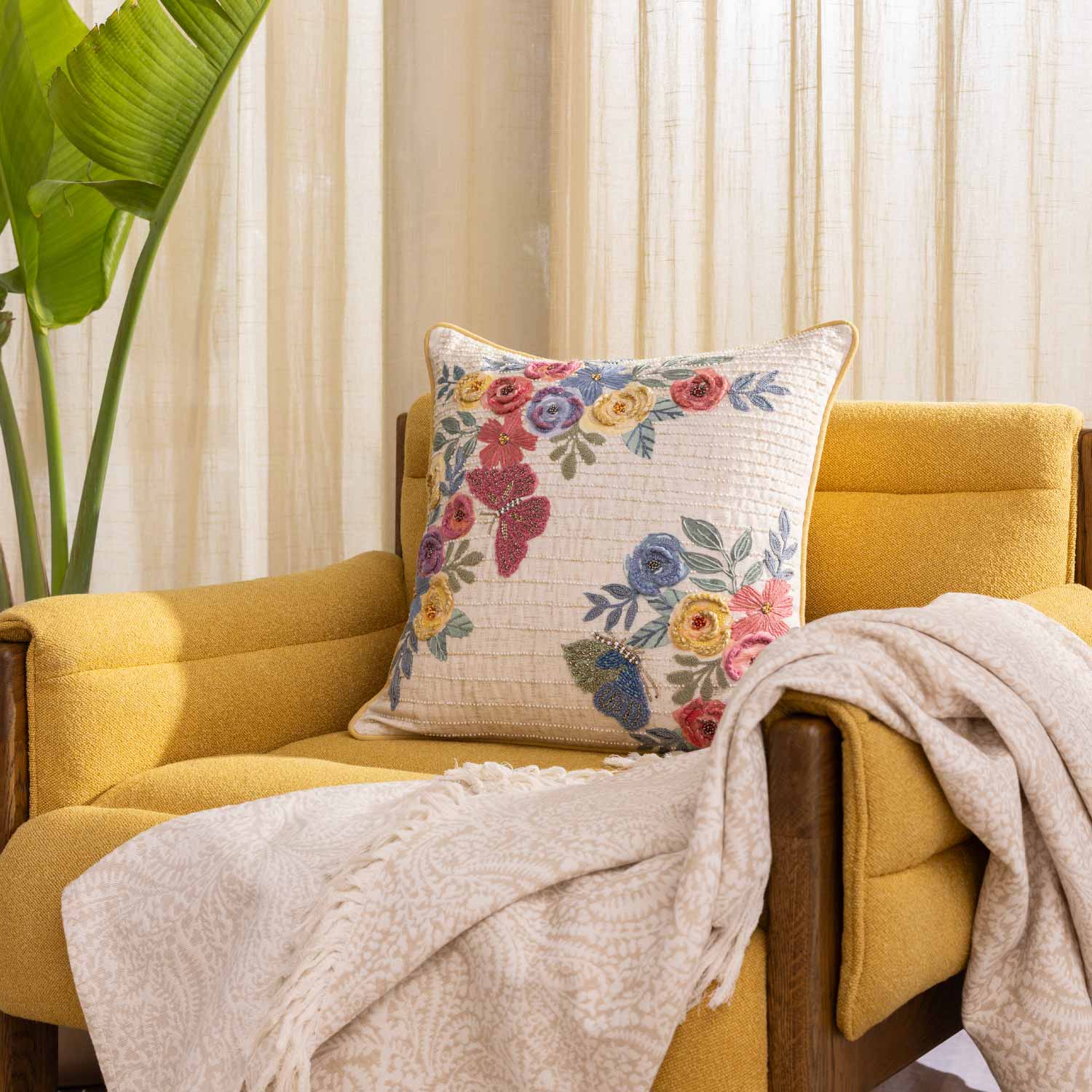
A comfortable chair is often where that transformation begins. Something with enough presence to define the corner, but enough ease to make you want to stay. The Deccan Teak Lounge Chair, with its warm teak frame and upholstered seat, lends itself naturally to this kind of setting; it feels equally at home beside a window with a book or tucked into a quieter corner of the living room.
The right corner is usually one the house has already chosen for you. Sometimes, it is simply a space that has been overlooked until now. Once you find it, resist the temptation to overfill it. A chair, a small table and something soft underfoot can be enough to establish an entirely new rhythm.
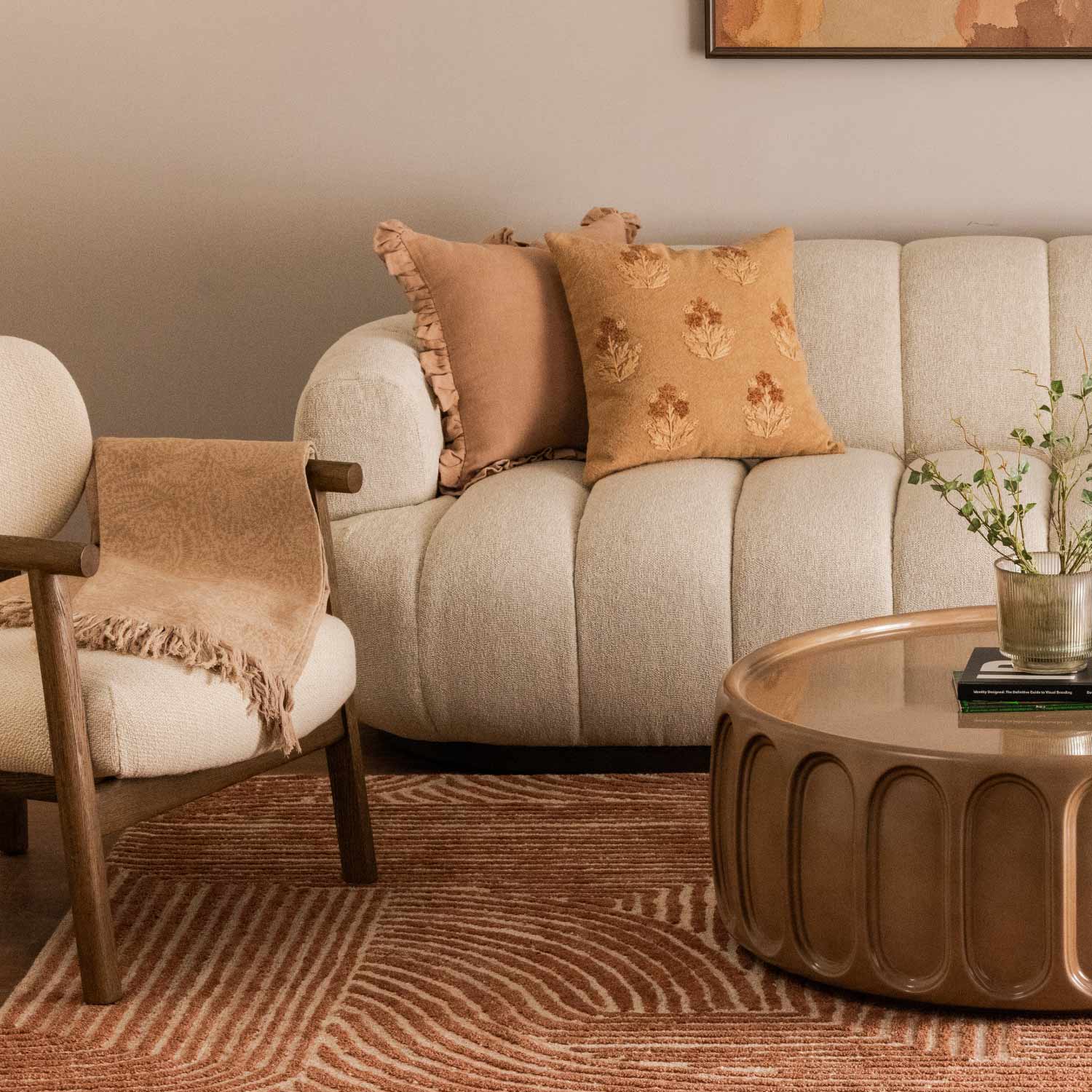
A rug is particularly useful here. Rather than simply occupying the floor, it can create a visual boundary within a larger room, quietly announcing that this is a space of its own. Something like Obeetee's Tessel Hand Tufted Woollen Rug, with its muted palette and abstract pattern, can ground the arrangement without demanding attention from it. The result feels less like a collection of furniture and more like a small world within the room.
The Comfort of Thoughtful Details
Texture matters. A soft rug underfoot, a cushion that changes the way a chair feels, a throw within reach when the evening gets cooler, all of these are small additions, but they make the space responsive to the way it is actually lived in. The same is true of colour. There is no need to create a perfectly coordinated arrangement. Instead, let the surrounding pieces share a quiet relationship: warm woods with earthy tones, a patterned rug against simpler upholstery, or a cushion that introduces just enough contrast.
The aim is comfort without clutter. A space that feels collected over time rather than assembled all at once.
Making Room for the Rituals That Matter
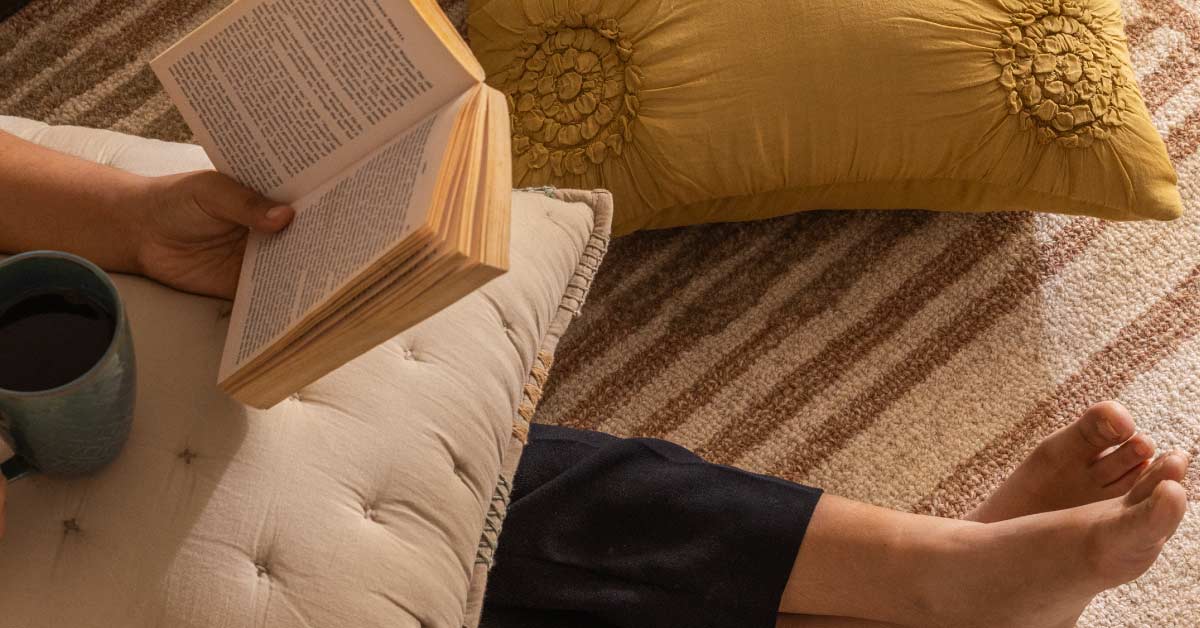
Eventually, it is the rituals that give a quiet corner its identity. The first cup of tea before the day begins. A few chapters before bed. Music on a Sunday afternoon. Ten minutes spent watching the rain. These are not grand occasions, but they are often the moments that make a home feel most like our own.
A small side table becomes part of these rituals almost without notice. The Axis Teak Side Table, with its warm wood and marble surface, offers just enough space for a cup, a book, or a lamp without interrupting the simplicity of the arrangement.
And that may be the secret to creating a place to pause: not designing it around what the space should look like, but around how you want to feel while you are in it. The most meaningful corners of a home are rarely the ones with the most in them. They are the ones that give something back; a little quiet, a little comfort, or a few minutes that belong entirely to you.
Because a home does not only need spaces for living. It needs spaces for simply being.
Frequently Asked Questions (FAQs)
Q1. What makes a corner feel inviting rather than simply empty?
Comfort and intention. A well-placed chair, soft rug, and a surface for everyday essentials can give an overlooked corner a sense of purpose.
Q2. How can a rug help define a small space?
A rug creates a subtle visual boundary, helping distinguish a seating area from the rest of the room without dividing it physically.
Q3. What should you place beside an accent chair?
A compact side table is useful for keeping a book, cup of tea, or lamp within reach, while a cushion or throw can add another layer of comfort.
Q4. How do you keep a quiet corner from feeling over-styled?
Start with only what you need and let the space evolve naturally. A few personal objects often make it feel more lived-in than a perfectly coordinated arrangement.

