

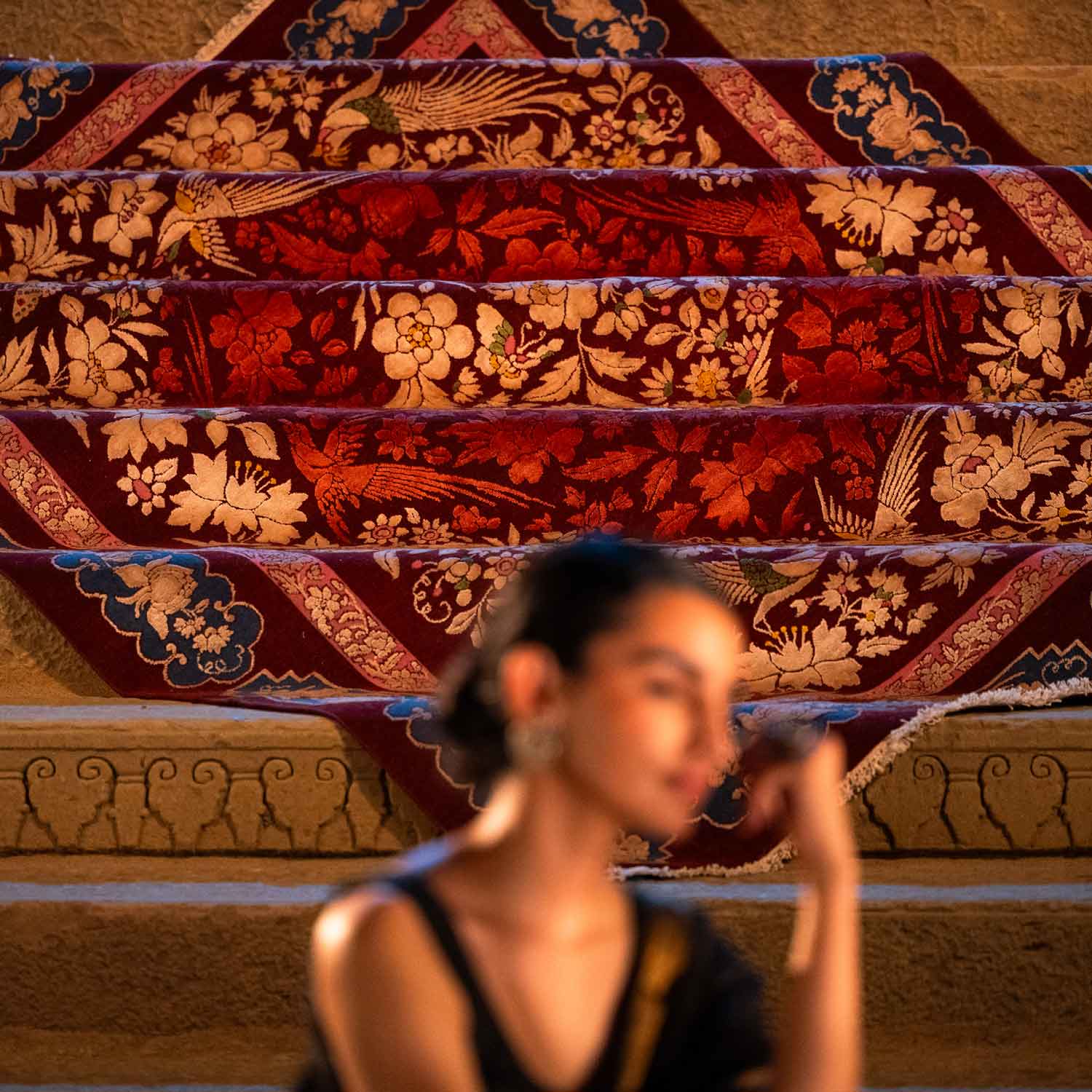
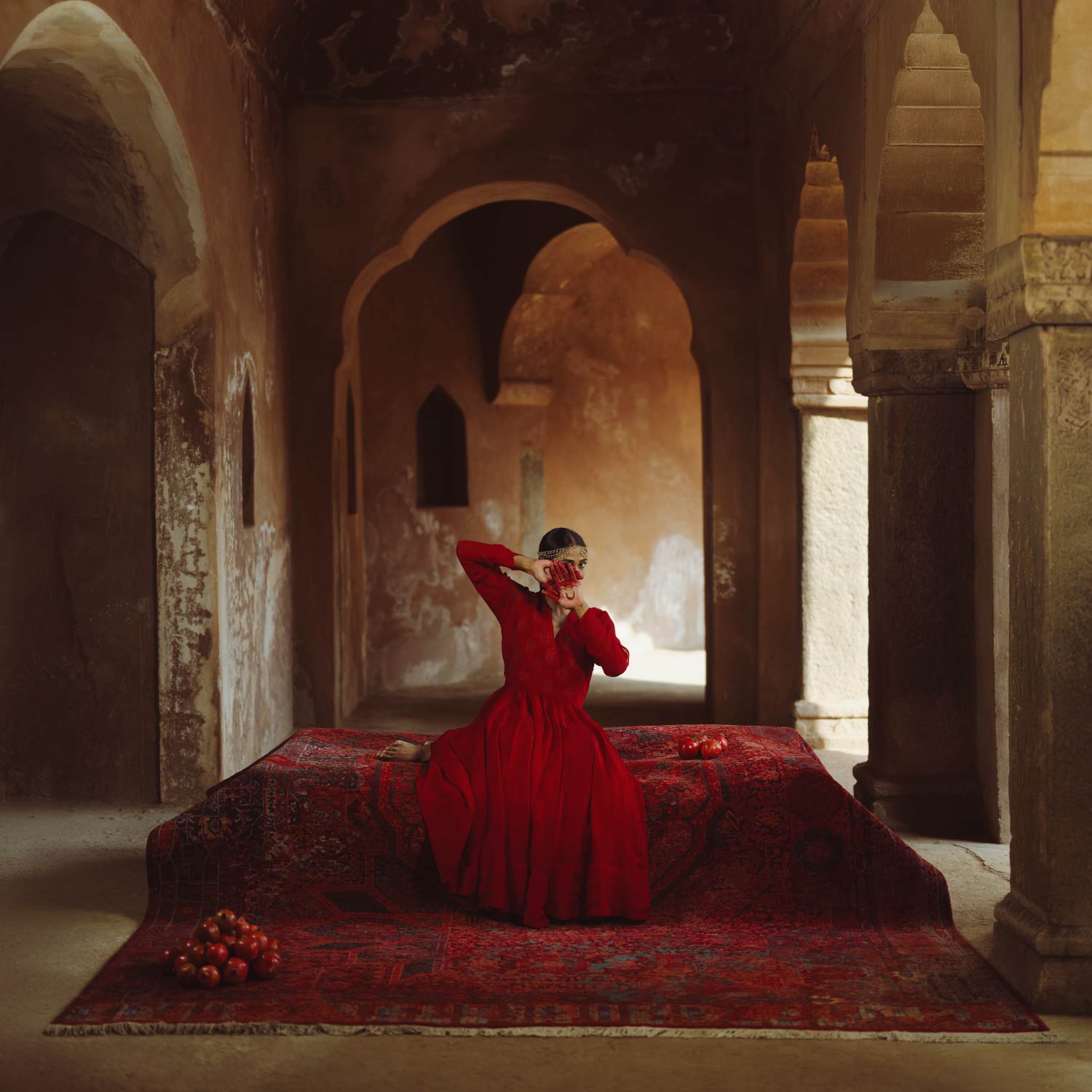

Nature has a way of designing without ever looking designed. A shadow falling across a wall, the uneven rings of a tree trunk, the repetition of leaves on a branch, the way clouds gather and disperse - these are patterns we encounter so often that we rarely stop to call them patterns at all. Yet they shape the visual world around us, and, inevitably, the spaces we choose to create for ourselves.
Verde, Obeetee’s contemporary luxury rug collection, draws from this instinctive vocabulary of the natural world, bringing together geometry, abstraction, organic forms and colour. But its real interest lies in what happens when these elements leave nature and enter the home. A rug can echo the landscape outside a window, introduce movement into a room of straight lines, or become the unexpected burst of colour that changes how everything around it is perceived. With primarily hand-tufted wool designs and select wool-viscose pieces, Verde begins with nature, but finds its meaning in the spaces we live in.

Make the floor your focal point
Not every room needs a statement wall. Sometimes, the most compelling place for one is beneath your feet. With its unexpected palette and intersecting geometry, Verve can become the visual anchor of a room. Harvest, with its vibrant yellow geometric pattern, offers a similar sense of energy, particularly in spaces where the surrounding furniture and architecture are more restrained.
The idea is not to make everything compete. Let the rug speak, and allow the rest of the room to listen.
Let the rug soften the architecture
Contemporary interiors can often be defined by hard lines such as stone, timber, glass, and metal. A rug introduces something different: tactility, warmth and movement. Curvature, with its flowing linear forms, can soften rooms built around strong architectural geometry. Meanwhile, Neer, which is inspired by the movement of ocean waves, brings a quieter sense of rhythm, allowing the eye to move across the surface rather than stopping at a single motif.
In spaces like these, a rug becomes less an object and more a transition between the built and the lived.
There is a reason natural references have such enduring relevance in interiors. They bring with them a sense of familiarity. Verdant, with its leafy composition, can work alongside wood, linen, cane and stone to create a room that feels connected to the natural world. It need not be paired with overtly botanical interiors; sometimes, a single organic gesture is enough.
Create contrast, not uniformity
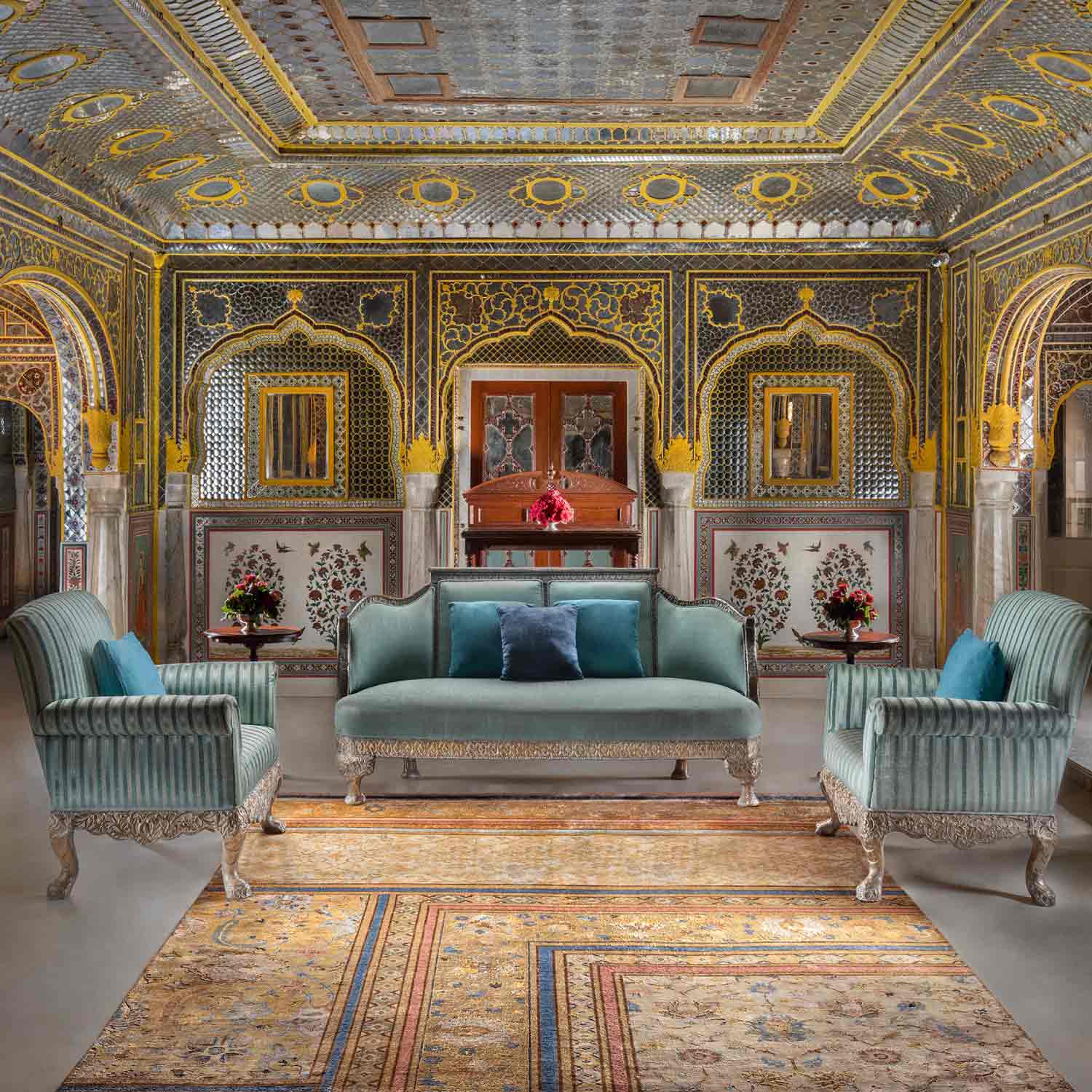
The most interesting rooms are rarely the ones where everything matches. They allow different materials, periods and visual languages to coexist. Brickhaven, with its rustic palette and abstract character, can introduce a sense of age into a contemporary setting. Conglomerate, meanwhile, can sit comfortably amongst more expressive furniture and artwork, adding visual complexity without overwhelming the composition.
This is one of the quiet pleasures of handmade carpets: their presence can create a conversation between things that might otherwise feel unrelated.
Keep it quiet, and let texture speak
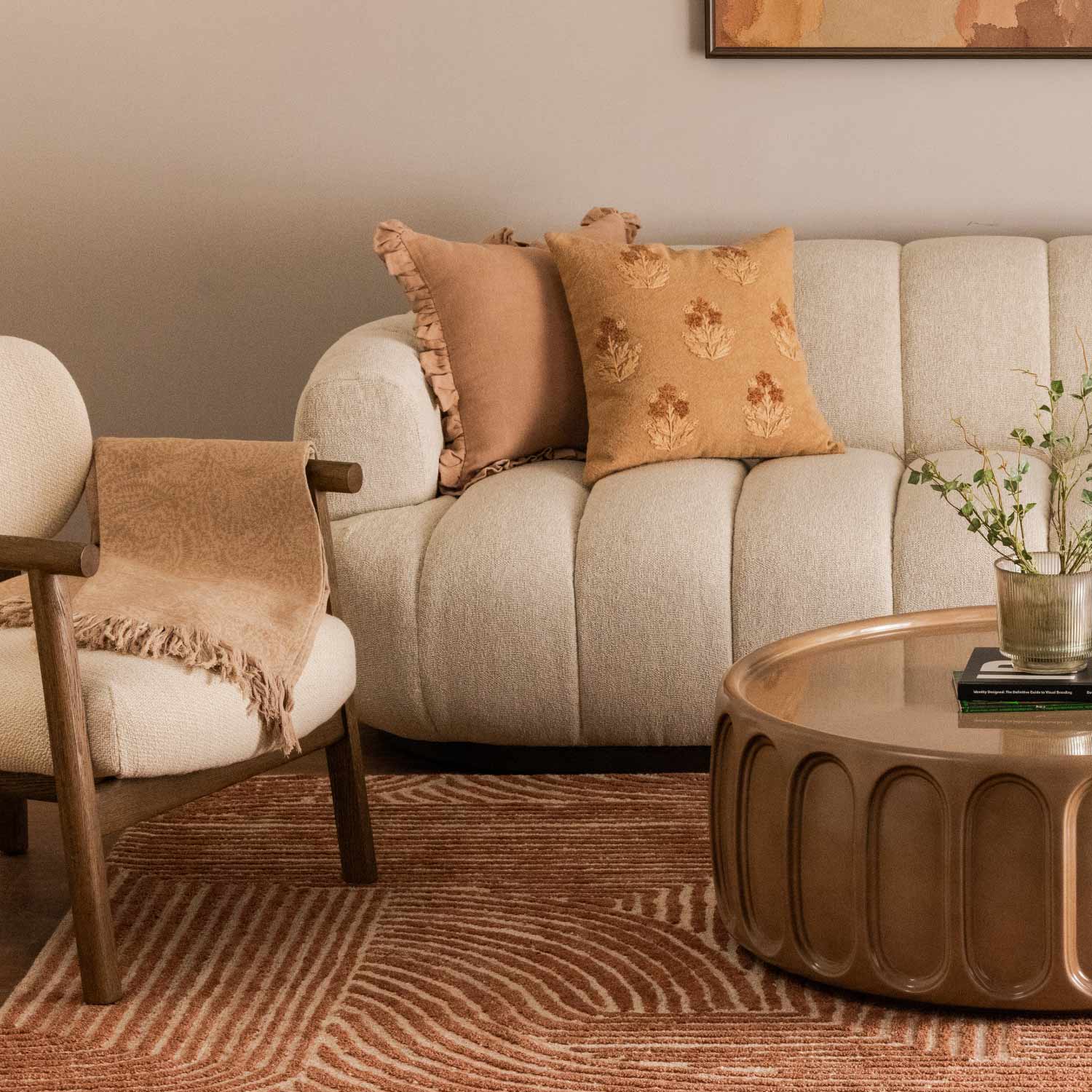
Not every rug needs to announce itself. Whirlpool, in its restrained beige and brown palette, offers an understated foundation for a room where furniture, art or architecture take precedence. Deep Coral, despite its richer floral composition, can similarly become a concentrated moment of colour against a pared-back setting.
Here, restraint is not the absence of design. It is the decision to let material, proportion and texture do the work.
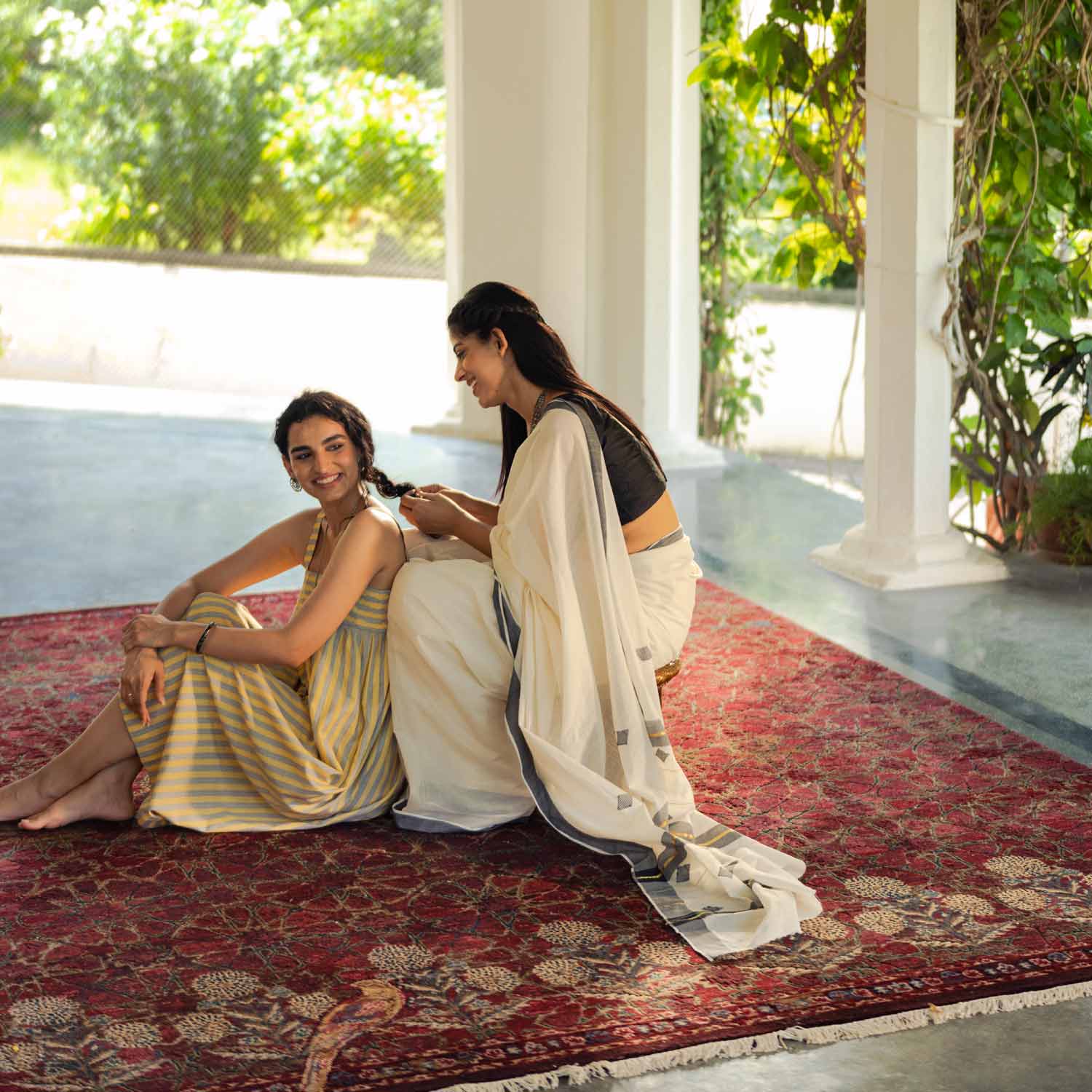
Perhaps the most interesting way to live with a rug is to question where a rug belongs at all. Wineyard, with its tonal grape-inspired palette, can anchor a room from below, but its design can also translate into a tapestry. It points towards a broader understanding of contemporary craft — where a hand-tufted piece can move between function and art, floor and wall. Because the language of the handmade is not fixed. It evolves with the spaces we create around it.
And perhaps that is what makes a rug worth choosing carefully: it does not simply occupy a room. It helps decide what the room can become.
Frequently Asked Questions
Q1. Are Verde rugs handmade?
The collection features primarily hand-tufted wool designs, alongside select pieces made using a wool-viscose construction.
Q2. Can a rug be used somewhere other than the floor?
Certain designs can lend themselves to being experienced as more than floor coverings. Wineyard, for instance, can translate into a tapestry, reflecting a contemporary understanding of craft where a hand-tufted piece can move between function and art.
Q3. How do I choose the right rug size?
The rug should be proportionate to the room and furniture. In a living room, for instance, a larger rug that accommodates the main seating area can help create a more cohesive arrangement.
Q4. How do I care for a handmade rug?
Regular, gentle vacuuming and prompt attention to spills can help maintain a rug. For deeper cleaning, professional cleaning appropriate to the rug's material and construction is recommended.
Q5. What materials are commonly used in luxury rugs?
Wool, silk, viscose and blends are commonly used, with each material offering different qualities in terms of texture, appearance, durability and feel.

