





The sectional sofa is, in many ways, a product of how modern life changed. As post-war homes moved towards open-plan layouts, furniture was no longer simply placed against walls; it was used to organise the room itself. Thus, the sofa became architectural in its own right. By the mid-century, modular and sectional seating had become closely associated with this new idea of flexible, social living.
That legacy is still visible in the way we live today. An L-shaped sofa can anchor a room almost effortlessly, creating a generous zone for conversation, lounging and everyday life. But its scale and geometry also make one element particularly important: the rug beneath it. Rather than treating the rug as something that simply fills the space around a coffee table, it can be used to establish a visual relationship between the furniture and the architecture around it.
The question, then, is not simply where the rug fits, but how it can help the room feel whole.

Begin With the Seating, Not the Rug
Before you pick a rug for your room, take a second to understand the footprint of your furniture. Measure the length and depth of the sectional, consider the coffee table and any additional chairs, and then decide how much of the seating arrangement you want the rug to hold. The simplest thumb of rule is this: the rug should be large enough to connect the furniture, rather than sit like an island beneath the coffee table.
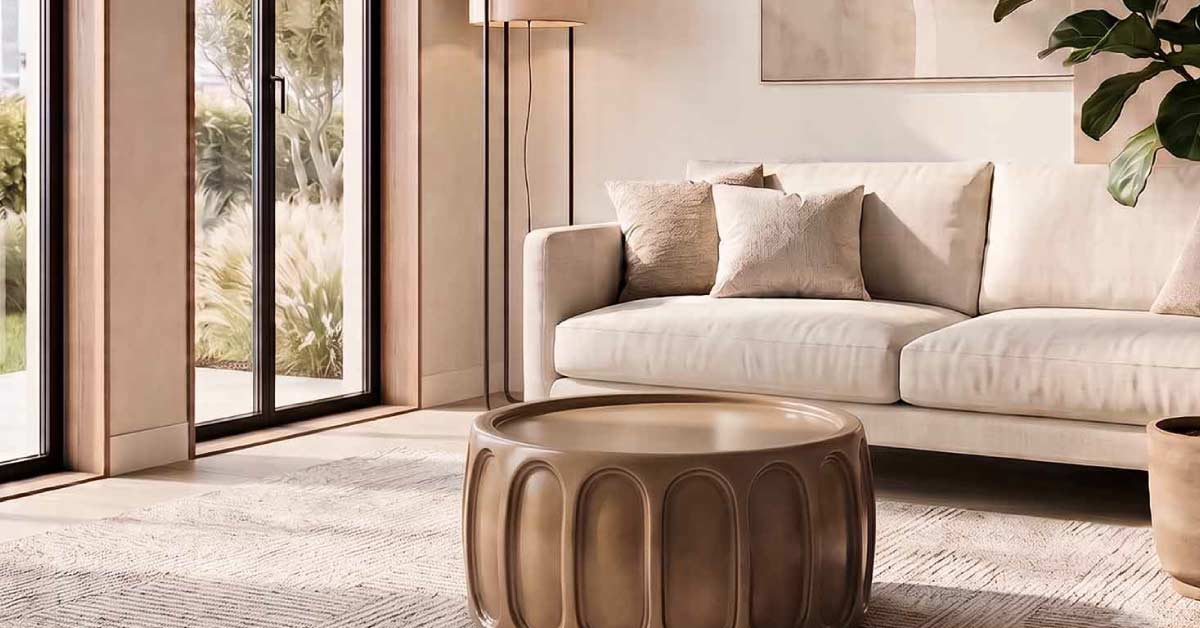
For a generous living room, placing all the legs of the sectional on the rug creates a unified seating zone. In a more compact space, bringing just the front legs onto the rug can achieve the same sense of connection.
This is the most expansive approach, particularly suited to large rooms and substantial sectionals. A larger rug allows the sofa, coffee table, and accompanying chairs to belong to one visual composition. A statement piece such as Obeetee’s Gond Art Vyaghra, inspired by the storytelling traditions of Gond art, benefits from generous floor space. Its intricate hand-knotted composition has room to breathe when used as the anchor of a larger seating arrangement.
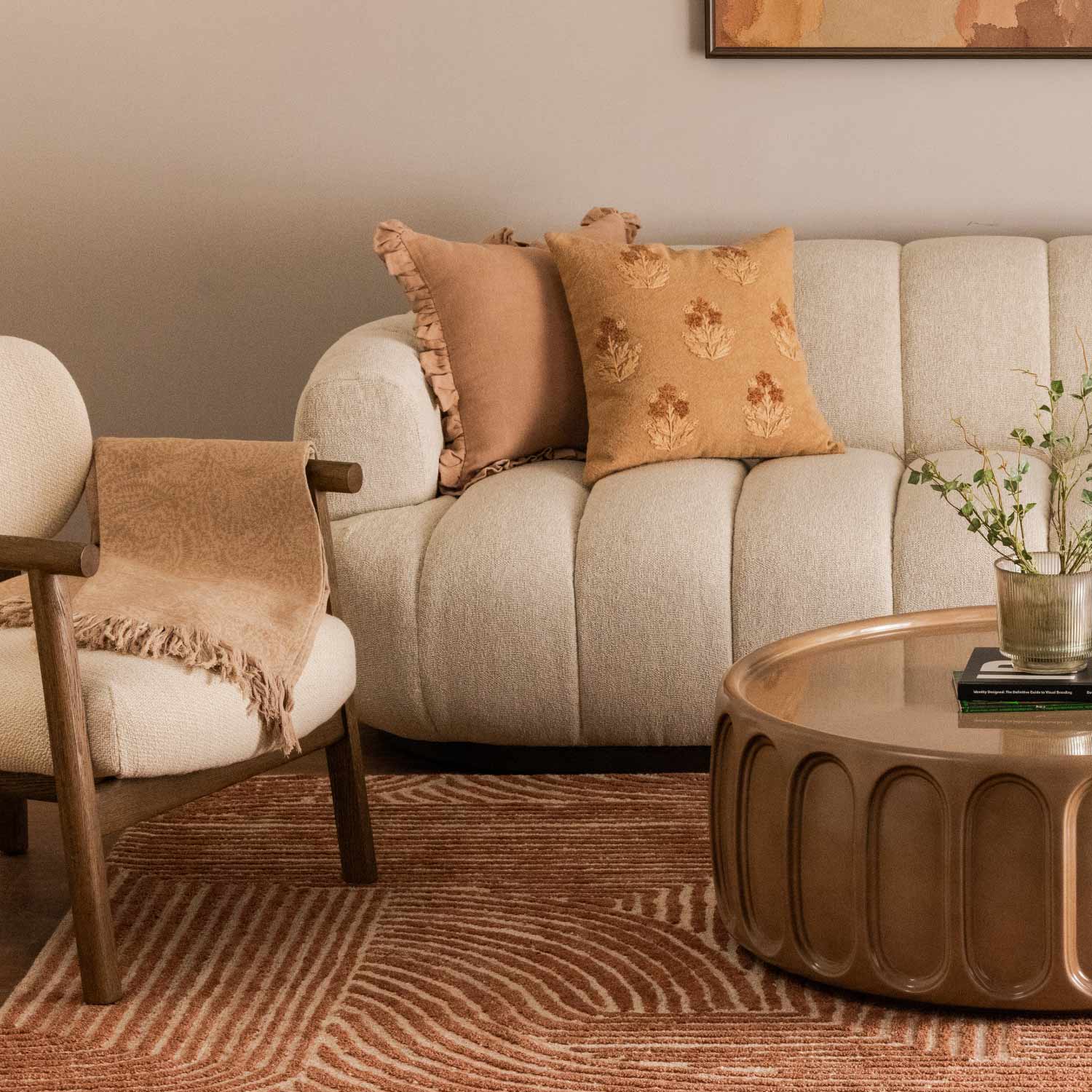
For most living rooms, this is the most versatile living room rug placement. The front legs of the sectional sit on the rug while the rear remains on the floor, creating a visual bridge between the sofa and the centre of the room. The earthy, restrained language of Obeetee’s Terra Drift makes it particularly adaptable here. Available in larger dimensions, it can extend comfortably beyond the sectional while allowing the design to complement rather than compete with the room.
3. Floating Within the Seating Area
A smaller rug can work when the room calls for a more intimate arrangement—but there is a fine line between intentional and undersized. If the rug only accommodates the coffee table, it is probably too small. When choosing rugs for L-shaped sofas, make sure the rug extends beyond
the outer edges of the sectional wherever possible. The longer edge should generally echo the longer side of the sofa, reinforcing rather than disrupting its shape.
Let the Rug Complete the Room
A sectional naturally creates a sense of togetherness. It draws people into one corner of the room, gives conversation a place to gather and, in doing so, establishes its own little world. The rug should follow that instinct. The most important thing is to avoid letting the rug become an afterthought. When it is too small, the seating arrangement can feel scattered. When it is considered in relation to the sofa, the coffee table, and the room around them, everything begins to settle into place.
Ultimately, how to place a rug with a sectional comes down to one principle: don't let the rug disappear beneath the furniture. Give it enough room to do its job. The right rug doesn't simply sit beneath a sectional. It gives the room a place to come together.
Frequently Asked Questions
Q1. What is the best rug size for a sectional sofa?
For most sectional sofas, an 8 × 10 ft rug is a good starting point. Larger sectionals and open-plan rooms may need a 9 × 12 ft rug or larger. The rug should extend beyond the sofa enough to visually connect the entire seating arrangement.
Q2. Can a rug be too small for a sectional?
Yes. A rug that only fits beneath the coffee table can make the sectional look disproportionately large and leave the seating arrangement feeling disconnected. When in doubt, size up rather than down.
Q3. How should you position a rug under an L-shaped sectional?
Align the longer edge of the rug with the longer side of the sectional wherever possible. This reinforces the sofa's natural shape and creates a more harmonious living room rug placement.
Q4. Can you put a round rug under an L-shaped sofa?
You can, although rectangular rugs are generally easier to align with the straight lines of an L-shaped sectional. A round rug can work as a deliberate design choice in a smaller, more informal seating arrangement.
Q5. What is the best rug placement for a sectional in an open-plan room?
Use the rug to define the living area within the larger space. A generously sized rug with at least the front legs of the sectional on it can create a clear visual boundary without requiring walls or partitions.

