


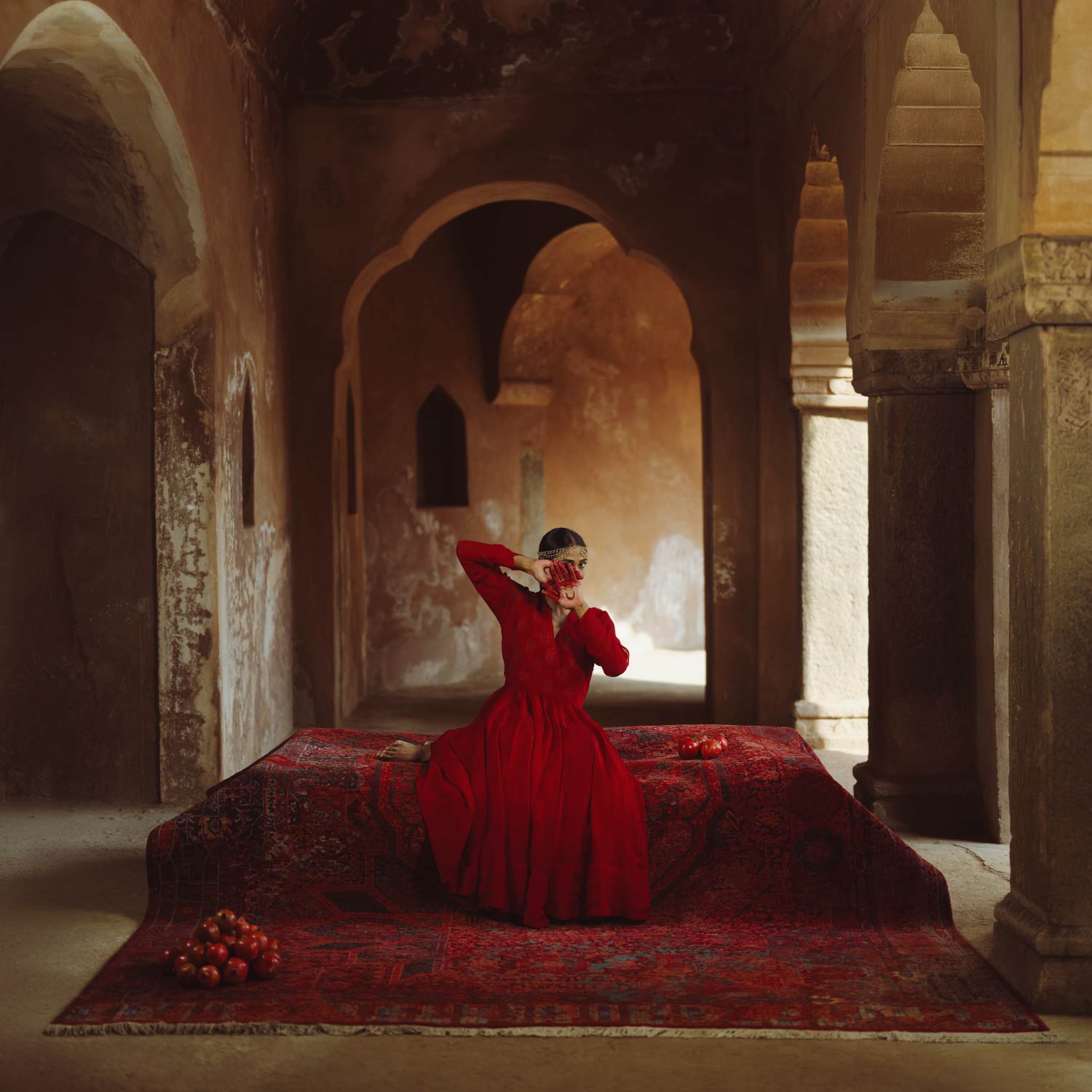
Why Some Rugs Make a Room Feel Complete and Others Don't
Most people sense it before they can name it. A room looks right, or it doesn't. The rug plays a larger role in that determination than almost any other single element—and when the rug is wrong, the room tells you. The furniture seems uncomfortable in its position. The space feels either crowded or empty, regardless of what's in it. There is no centre. Rug placement mistakes are the most frequent cause of this unease. The solutions are not complicated, but they require understanding what a rug is actually doing in a room.
The wrong size is not a minor problem
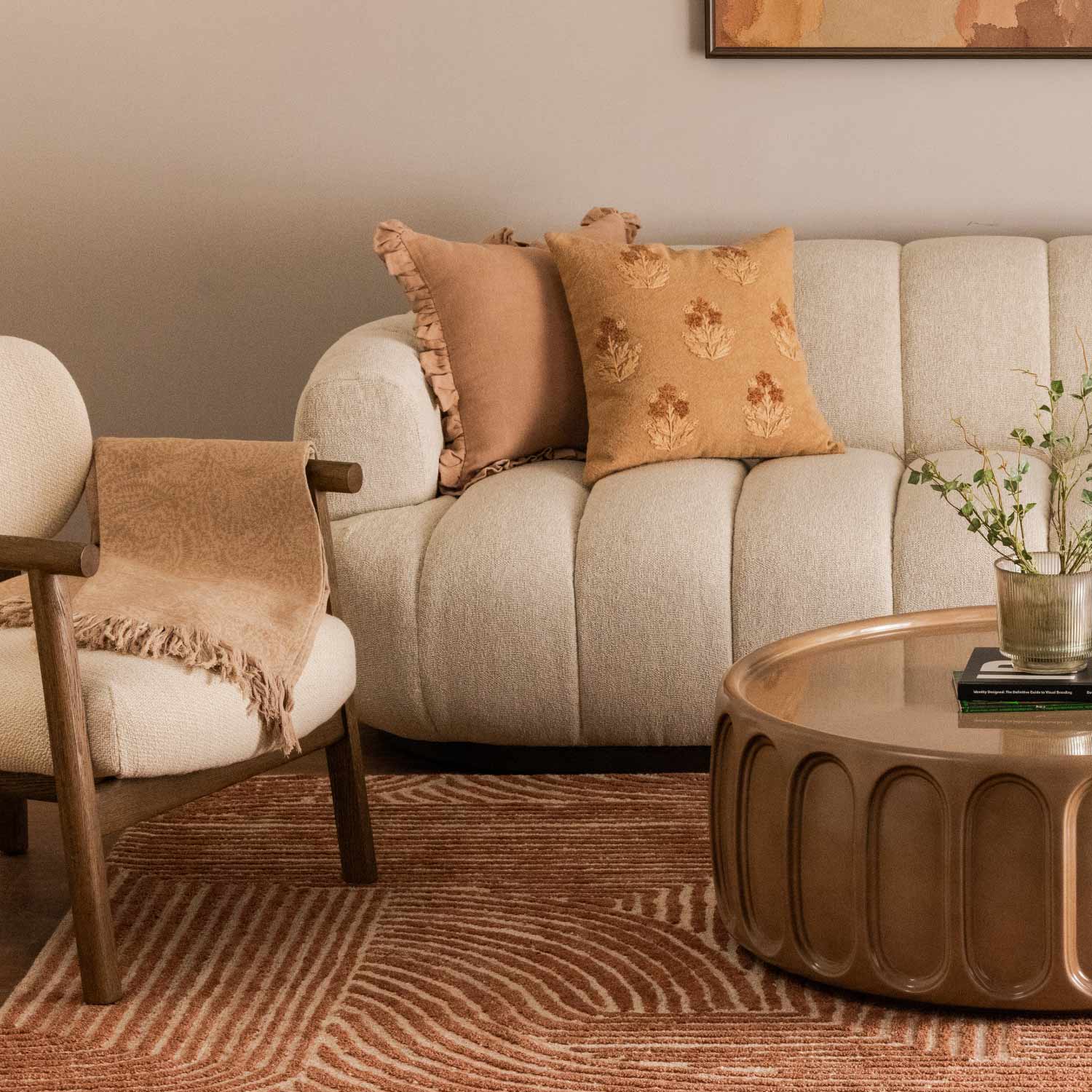
A rug that is too small for its setting does not merely look small. It makes every piece of furniture around it look displaced. The sofa appears to be advancing on the rug. The chairs look as though they have wandered in from another room. When furniture surrounds a rug without connecting to it, the room reads as a collection of objects rather than a composition. The reverse problem—a rug that is too large—is less common but equally disruptive. A rug that extends to the baseboards, that leaves no border of hard floor visible, turns a room into a single undifferentiated surface. It removes the sense of zoning that a correctly scaled rug provides. The proportional logic is not arbitrary. A rug needs to be large enough that the furniture arrangement sits on it or relates clearly to it, and small enough that it reads as a defined surface within the room.


Off-centre placement and room asymmetry
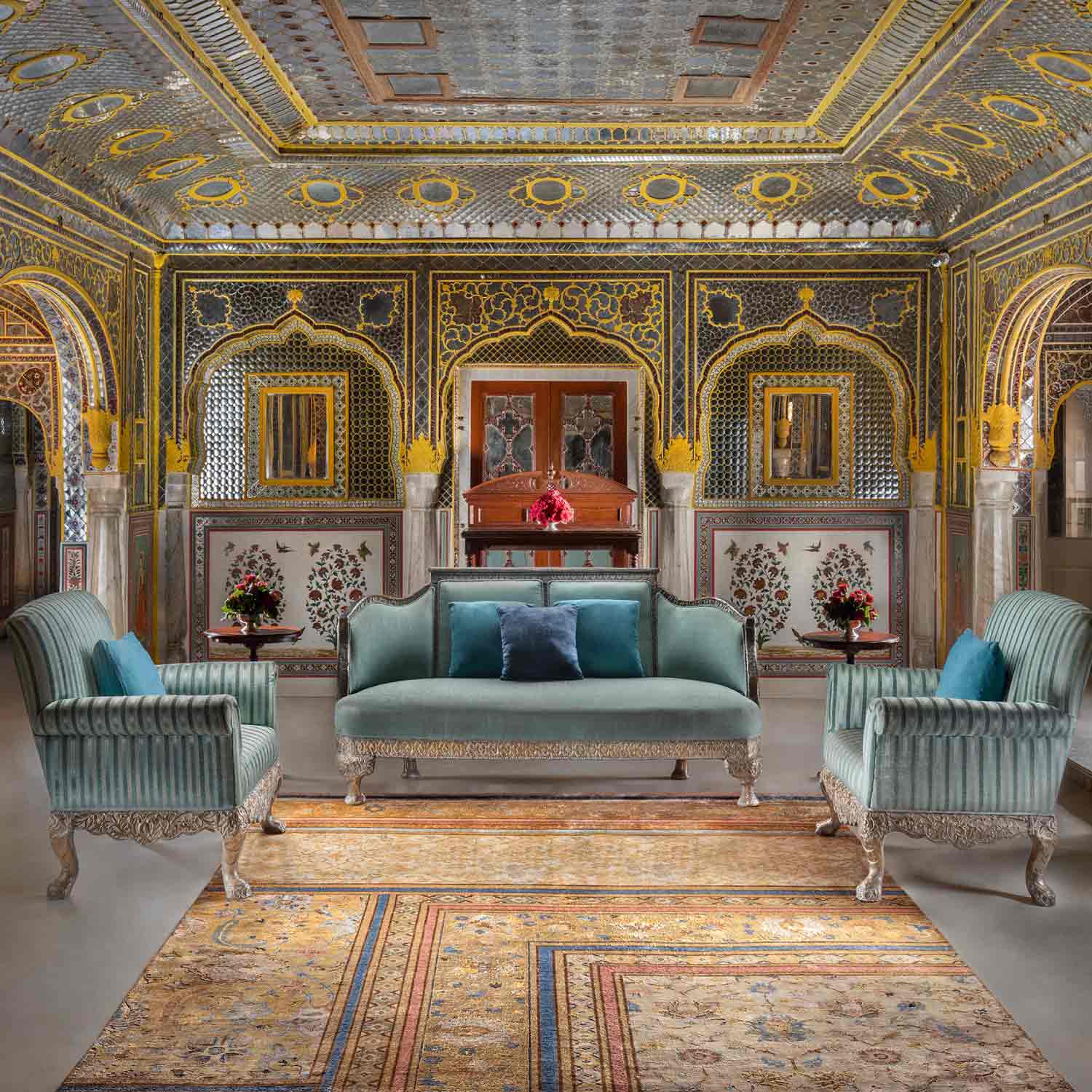
A rug that is not centred in its seating arrangement produces a subtle but persistent tension. The room does not feel settled because the visual anchor—which is what a rug is—is not where the eye expects it. This is one of the more insidious rug placement mistakes because it can be hard to identify. The room looks almost right, but something is bothering you.
The fix is usually straightforward: centre the rug under the furniture grouping, not under the room. In a rectangular room with a bay or alcove, the furniture arrangement may not sit in the exact centre of the space. The rug should follow the furniture, not the room's geometry. The exception is a dining table. A dining rug should be centred on the table, full stop. The table is a fixed object; the rug exists to define its zone.
Pattern conflicts and visual competition
A room with a heavily patterned rug, patterned upholstery, and patterned curtains is not automatically a problem—but it requires a unifying logic. If the patterns are of similar scale and visual weight, they compete. If they are at different scales—one large, one medium, one small—they can coexist. The reason many rooms feel wrong is not that they have too much pattern, but that the patterns are at war. A rug with a large, busy repeat placed alongside upholstery with a similarly scaled print has no visual hierarchy. Neither element reads clearly.
When choosing rug correctly in a patterned room, the usual approach is to let one element carry the major pattern and reduce the others. If the rug has a complex traditional field design, the upholstery should be plain or use a small-scale texture. If the upholstery is bold, the rug might be a tone-on-tone weave or a simple geometric.
The orientation question
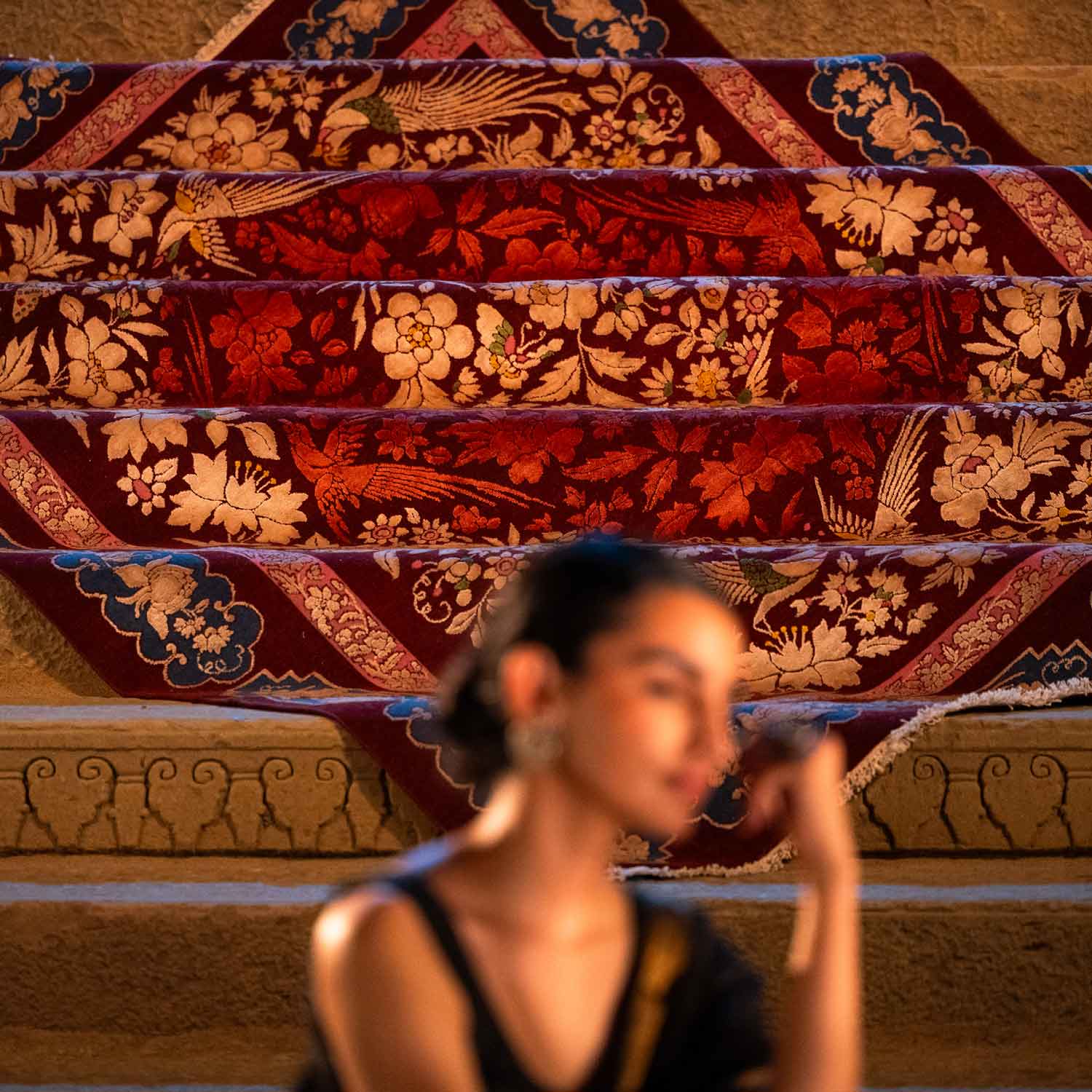
Rugs have a pile direction—the direction in which the fibres lean—and this affects how the colour reads. A hand-knotted or hand-tufted rug viewed with the pile leaning toward you will appear darker and richer. Viewed against the pile, it appears lighter and slightly more muted. This means that the orientation of a rug in a room changes its apparent colour. A rug that looks warm and deep from one end of the room will look cooler and lighter from the other. In a long room where the rug is seen primarily from one direction, orienting the pile to face the main viewpoint gives the most colour saturation. This is rarely discussed in rug selection advice, but it is the reason why a rug that looked right in the showroom can look unexpectedly different once it is laid in a specific room. Rotate it 180 degrees before deciding it is the wrong colour.

