



A RUG IS
NOT
DECOR. IT IS
WHAT
MAKES A
ROOM
Keywords: rug in interior design, why rugs matter, importance of rugs in a room
Most people treat a rug as the last thing that goes into a room. The furniture arrives, the walls are painted, the lighting is sorted—and then someone says, 'We should probably get a rug.' That is the wrong order, and it produces the wrong result.
A rug is not finishing trim. It is the foundation of a room's visual logic. Everything placed on top of it—every chair leg, every sofa foot, every coffee table—derives its sense of belonging from the rug beneath it. When the rug is absent or wrong, objects in a room float. They do not relate to each other. They are simply things in a space.

Why rugs matter more than most surfaces
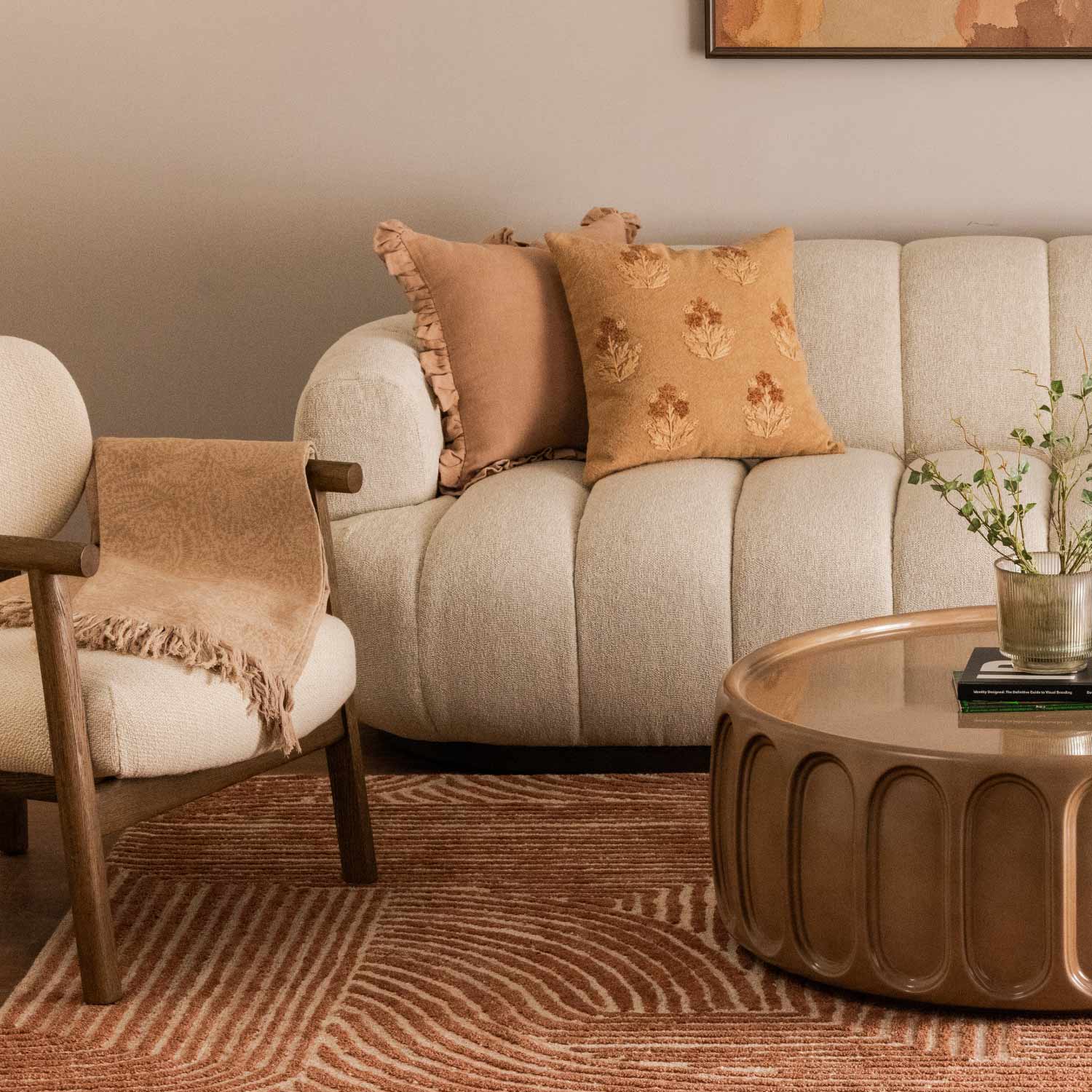
In interior design, the importance of rugs in a room goes well beyond covering a floor. A rug defines zones without building walls: seating reads as a group, circulation becomes legible, and the room gains a centre even when the architecture gives you none.
A rug also introduces acoustic mass. Hard floors in rooms with hard walls create echo and sharpness; textile on the floor softens footfall and speech, so a space feels inhabitable rather than ceremonial.
The rug in interior design also carries pattern, colour, and texture at a scale the eye can read from across the room—where paint is a backdrop, the rug is often the register on which everything else harmonises or fails.

The floor is not neutral
Treating the floor as a void treats the room as temporary. A rug establishes tonal register—warmer or cooler, busier or quieter—and tells you what kind of furniture belongs there.
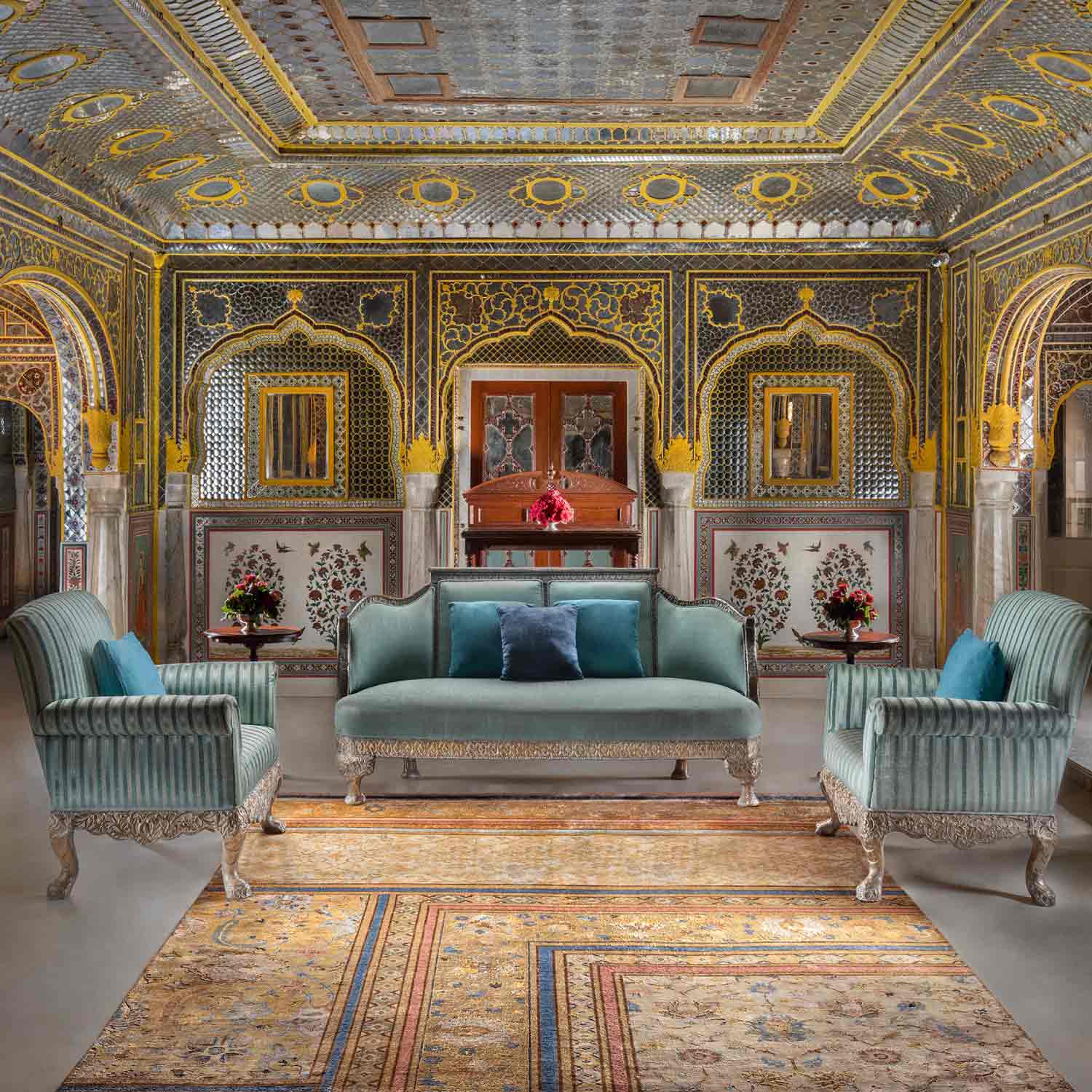
Traditional layouts still read because they work: medallions anchor a field, all-over repeats pace the eye, prayer-arch formats command a direction. Those are not nostalgia; they are spatial grammar.
Without that grammar, a room becomes a catalogue of pieces. With it, the floor stops apologising and starts leading.
When the rug is right
When the rug is correctly scaled and placed, nothing needs to shout. Edges line up with architecture where they should; furniture can sit slightly off-grid while still feeling deliberate.
That is what people mean when they say a room settles. It is not décor completing a checklist; it is a surface telling every object where it belongs.
