

Form. Craft. Home: How Domus Integrates Architectural Furniture into Contemporary Indian Living
The modern Indian home is undergoing a subtle yet stunning transformation. As our lives become more complicated, the spaces we retreat to are shedding visual chaos, leaning more towards simplicity, tranquillity, and lasting style. Nowadays, it’s less about cramming rooms with decorative items and more about creating spaces where every element has a purpose, both in function and aesthetics. Furniture is becoming more than just decoration; it’s starting to represent the very architecture of our daily lives.
This shift in how we think about things is exactly what Domus is all about. The name comes from the Latin word for home, and the idea draws inspiration from the age-old European architectural ideal where structure, proportion, and comfort come together in harmony. By adapting these timeless principles into modern designs, Obeetee’s Domus collection brings a fresh elegance to contemporary Indian living, creating a bridge between European aesthetics and the warm vibe of Indian homes.

The Geometry of Comfort
At the core of architectural furniture is a commitment to clarity. The charm of a space often lies in its visual calmness, where the lines of a chair or the curve of a sofa can really breathe. This minimalist style, influenced heavily by modernist and Scandinavian traditions, emphasizes restraint and authenticity in materials.
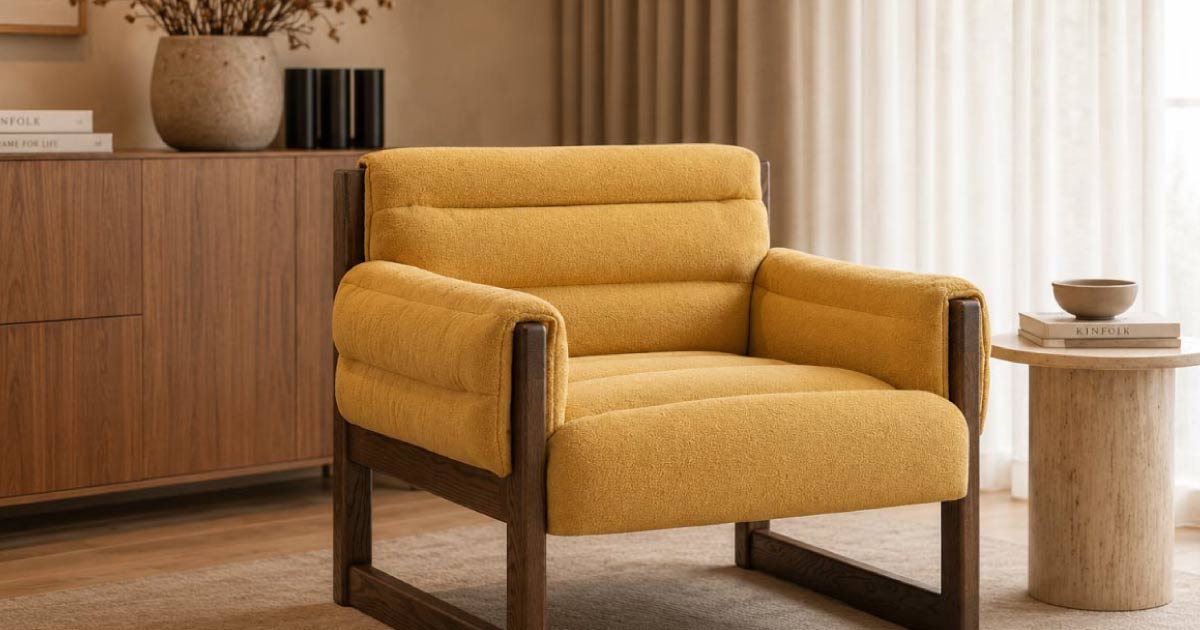
Think about how a room can change when it’s anchored by purposeful lines. The Loose lounge chair is a great example of this modernist spirit. It’s stripped of unnecessary frills, with its solid oakwood frame providing a clean, steady architectural outline. But home furniture shouldn’t feel stiff. With its plush seating and layered back cushions, this chair—dressed in an inviting, vibrant yellow—softens its structured design. It makes a statement without overwhelming the space, bringing a quiet confidence to a sunlit reading nook.
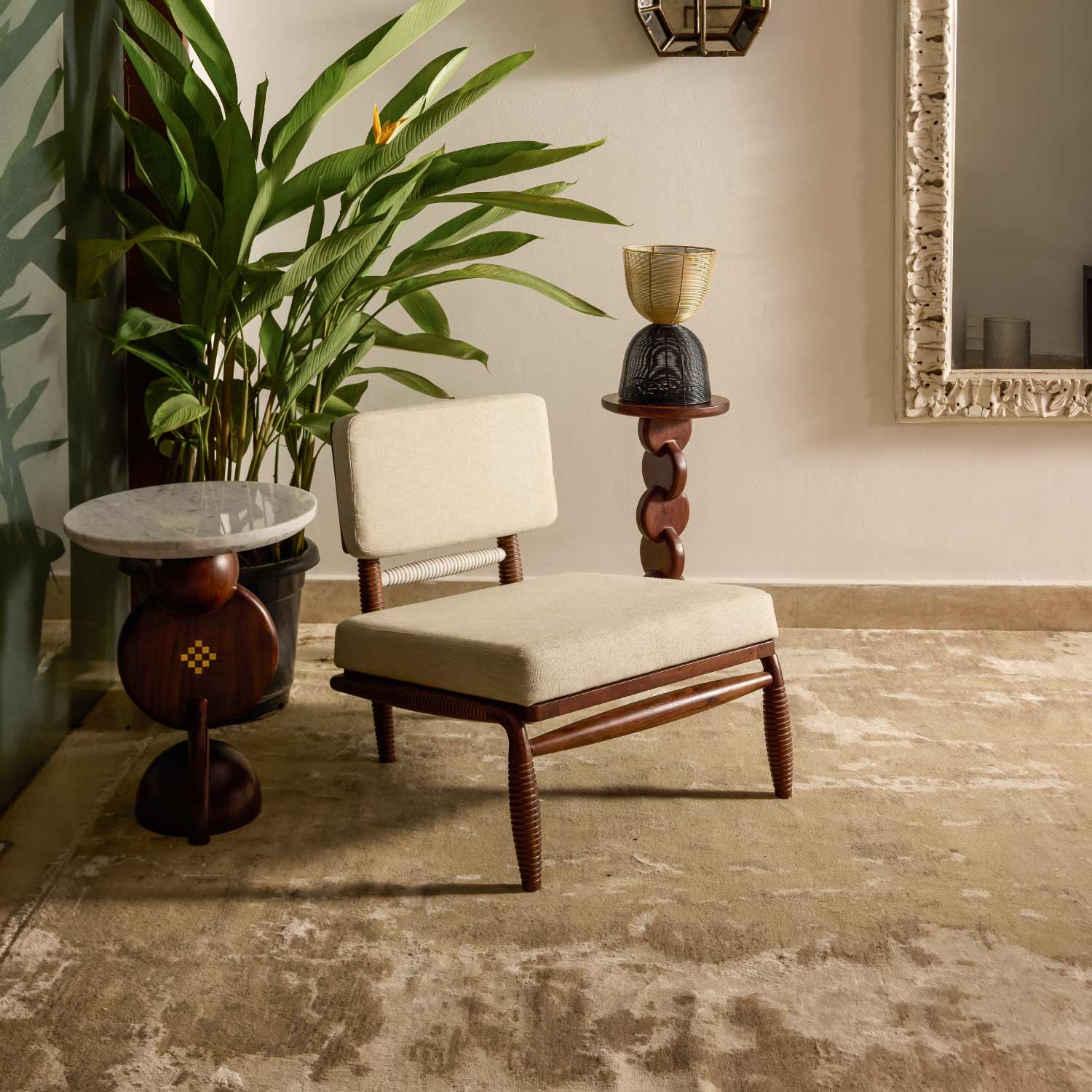
You can see the same dedication to quality materials in the Hyke lounge chair. Drawing heavily from mid-century Scandinavian design, it balances a structured oak frame with comfortable, soft upholstery. In modern Indian homes, which often have spacious, open layouts, chairs designed with this kind of restraint help carve out cozy corners within larger areas, providing a sophisticated yet light presence.
A Conversation in Materiality
Architecture is really a dialogue among materials, and bringing that conversation indoors adds a rich complexity to any living space. The modern style thrives on contrasting the raw with the refined, mixing warmth with coolness.
Introducing elements like stone, wood, and enamel-concrete to the living room adds an earthy, tactile weight. Take the Madison end table, for example; it’s a fantastic illustration of how materials can work together. Instead of being a solid block, its base is made up of stacked layers of North American oakwood, creating deep shadows and a structural intrigue. Sitting atop this warm, ribbed timber is a smooth limestone surface. The resulting contrast—the wood’s organic warmth versus the cool solidity of the stone—lets the natural materials define the room’s character.
But architectural design isn’t isolated; it resonates most when it connects with its cultural backdrop. The Tona small coffee table embodies this beautiful blend of global design and local memory. Made from enamel-concrete in a rich olive tone, its rhythmic, arched patterns nod to Romanesque architecture. Yet, its subtly tapered shape closely resembles the tabla, India’s classical percussion instrument. This gives it a sculptural quality that brings a unique cultural touch into a modern setting.
The Rhythm of the Room
While wood and stone form the backbone of a home, textiles and softer shapes really set the emotional tone. A living room needs a central gathering point—a space that welcomes togetherness and provides comfort after a long day.
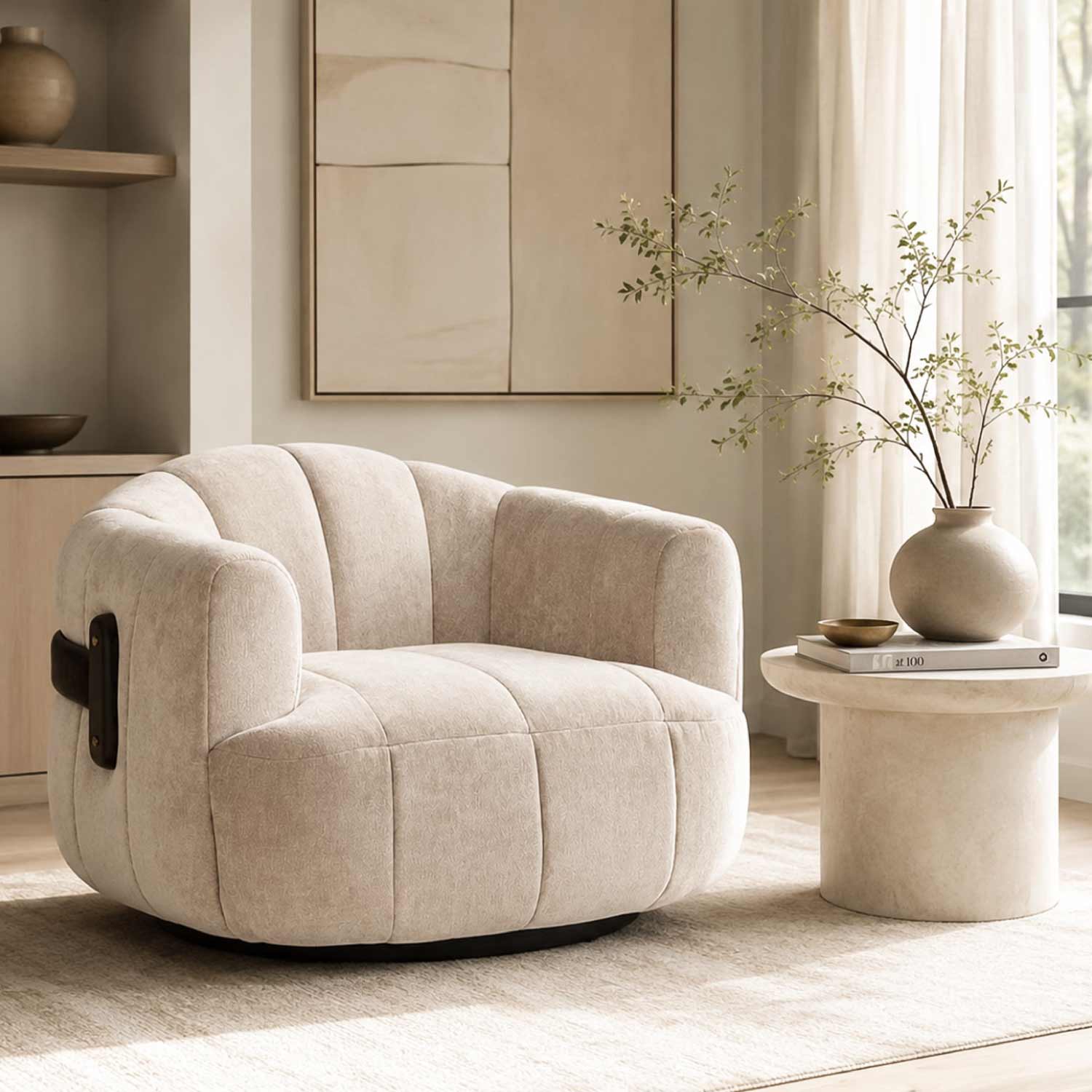
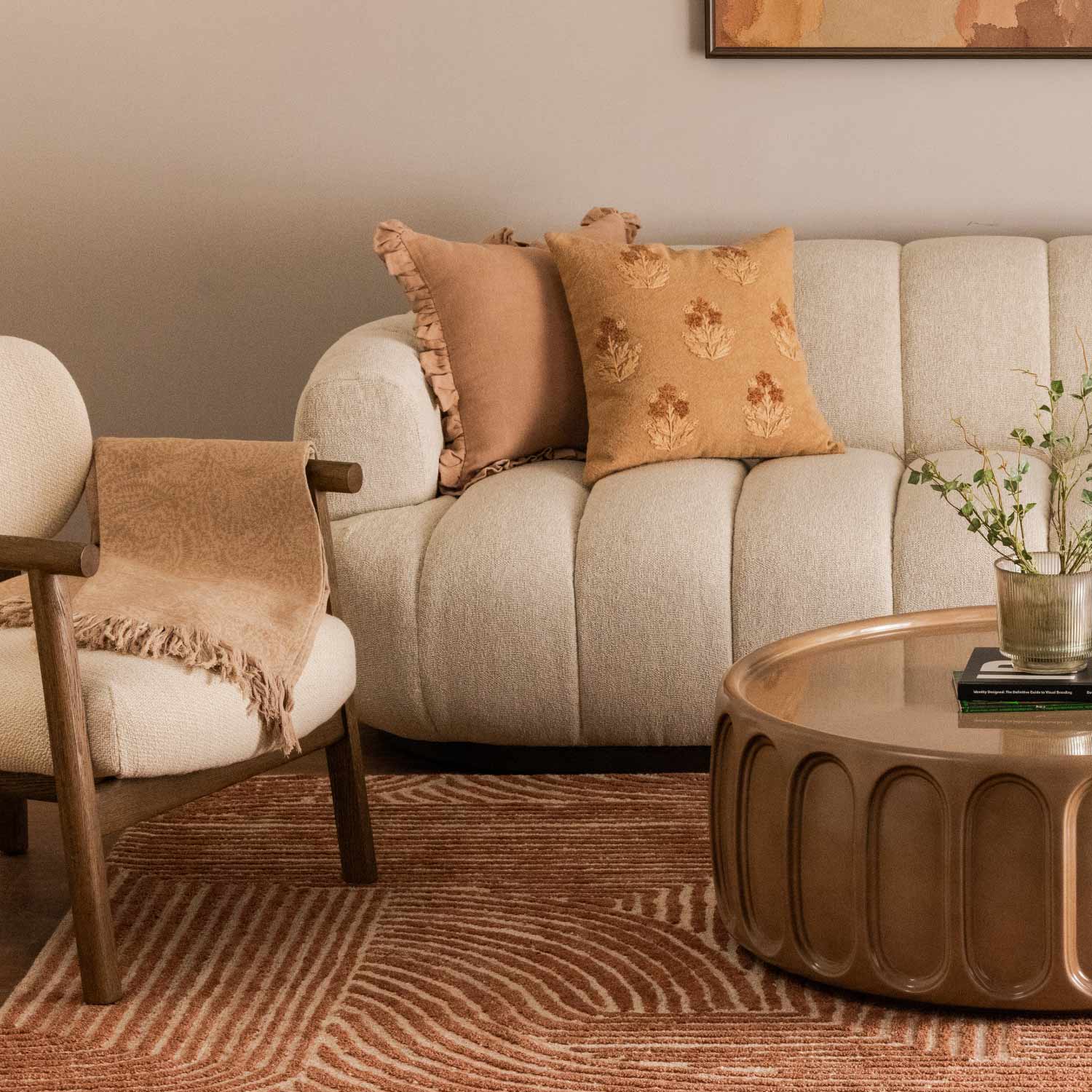
Here’s where the fluid design of the Maro sofa comes into play. Breaking away from rigid, linear shapes, this sofa boasts a curved silhouette that gently frames the seating area. Upholstered in a textured sand fabric, it features sculpted vertical channels that introduce a visual rhythm across its surface. This fluting gives the piece a sense of movement and depth, acting as a warm architectural embrace. It proves that sophisticated, sculptural design can also be inviting and immensely cozy.
Building Your Sanctuary
Bringing architectural furniture into your space is about making a thoughtful choice about how you want to live. It’s a move away from fleeting trends and a step toward timelessness. The Domus collection isn’t just about decorating a room; it’s about crafting an environment using natural materials, clear forms, and lasting comfort.
Whether it’s the rhythmic fluting of a sand-hued sofa, the cool touch of a limestone table, or the honest oak frame of a mid-century chair, each piece is designed to hold significance in your life. They remind us that the best homes aren’t just filled with furniture—they’re carefully, beautifully constructed.